
A lamp in the morning, a dress after lunch
How one InstantSnap workspace handles a home-goods shot and a clothes shot on the same day, without mixing the two catalogs.
A lot of small shops do not sell one kind of thing. The morning parcel is a lamp. The afternoon parcel is a dress. The usual mess is one camera roll, both photos still full of the counter, and a person somehow standing behind the lamp because the last setup was for clothes. InstantSnap keeps the jobs apart. Product for the lamp. Clothes for the dress. A filter in Shots so the catalogs do not merge.
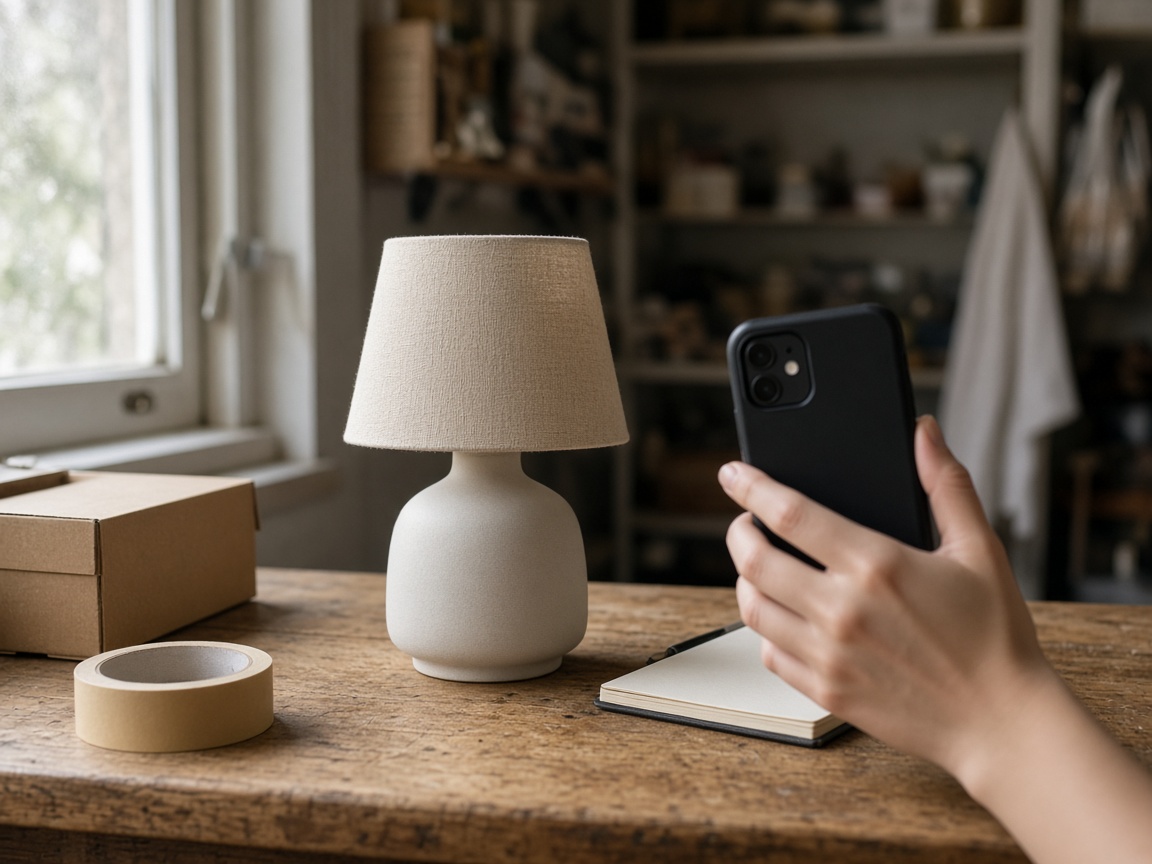
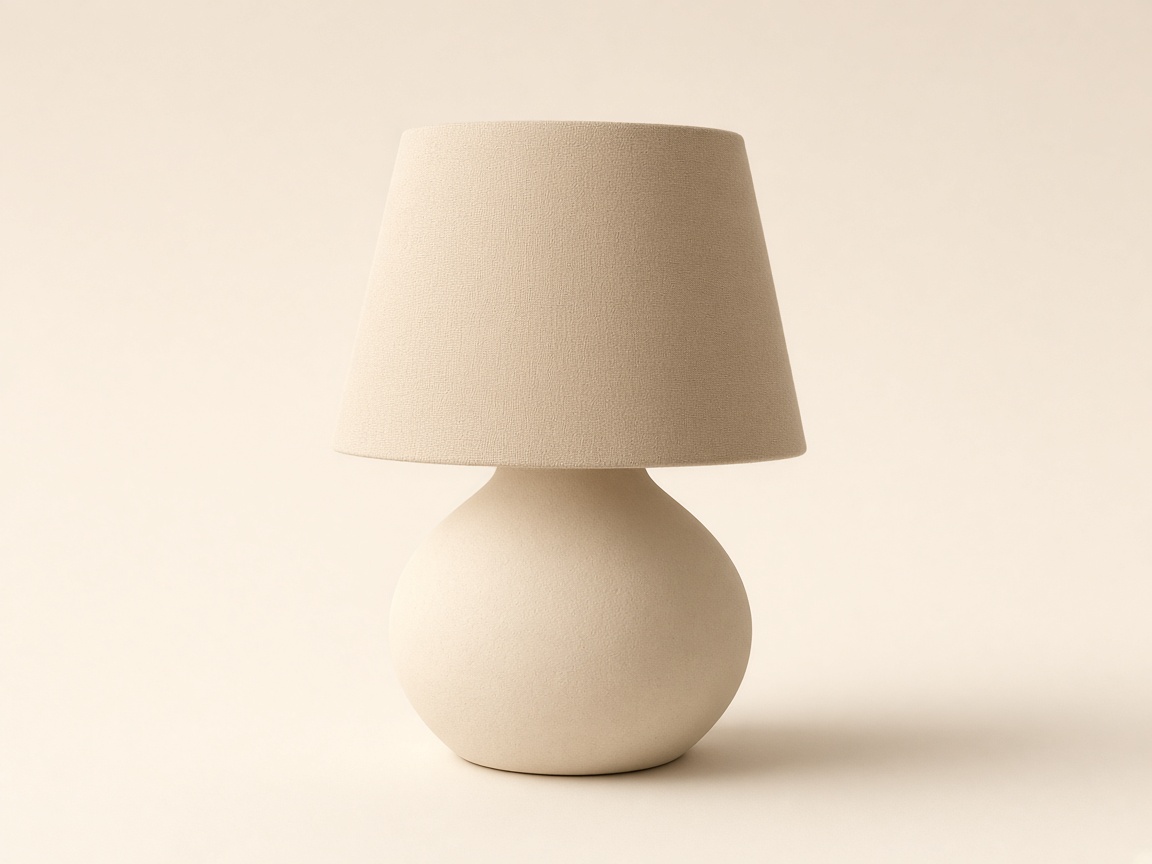
The lamp is a product
Choose Product. No model. A lamp does not need a person to explain it. 3/4 shows the shade and the base together. Detail is for a switch or a seam in the shade, when the listing needs it. Cream, White, or Soft shadow keeps a light lamp visible. Wood or Lifestyle is a single hero, not the background for every lamp in a grid. Square for the grid. Portrait if the lamp is tall.
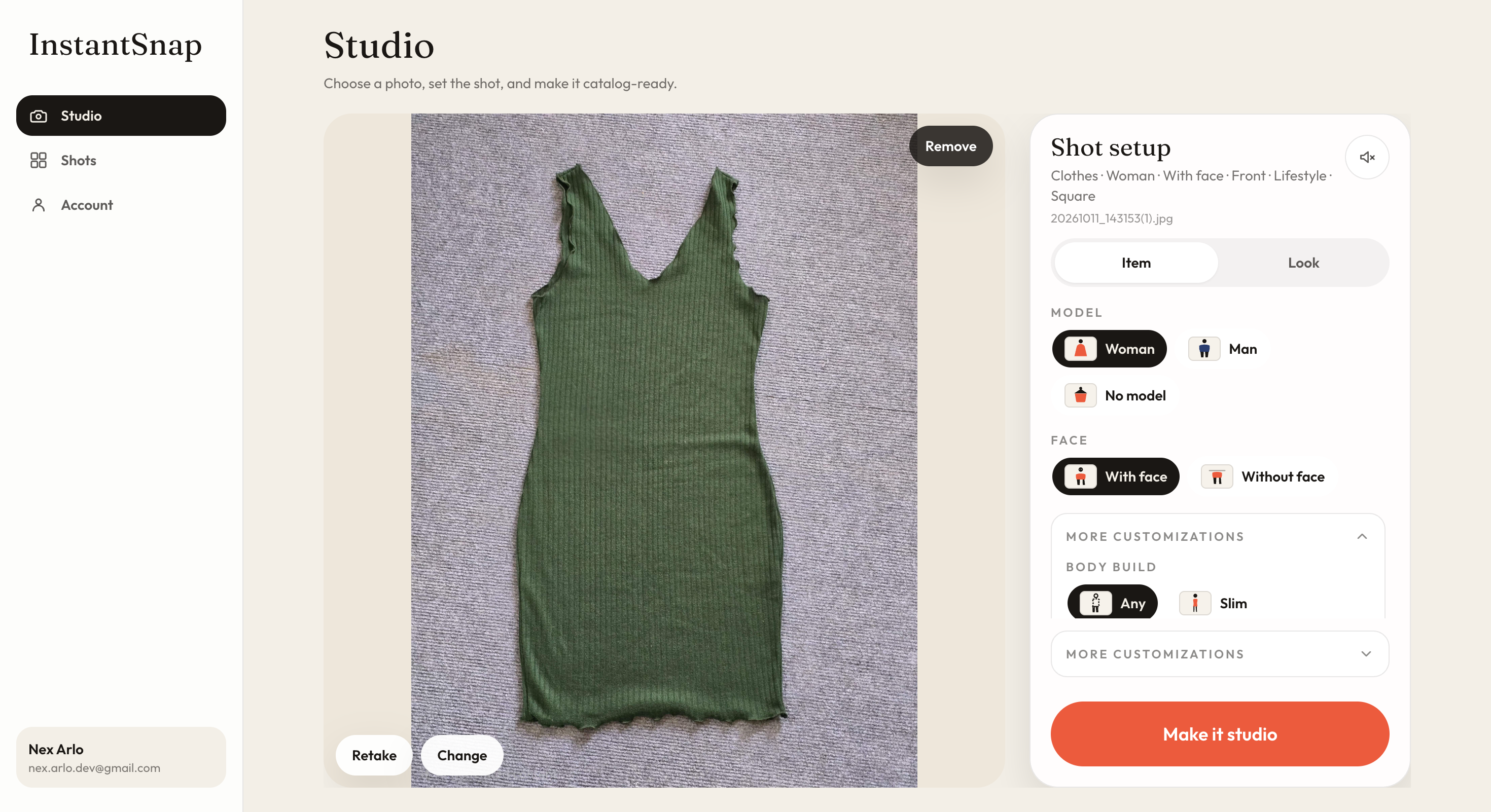
The dress is clothes
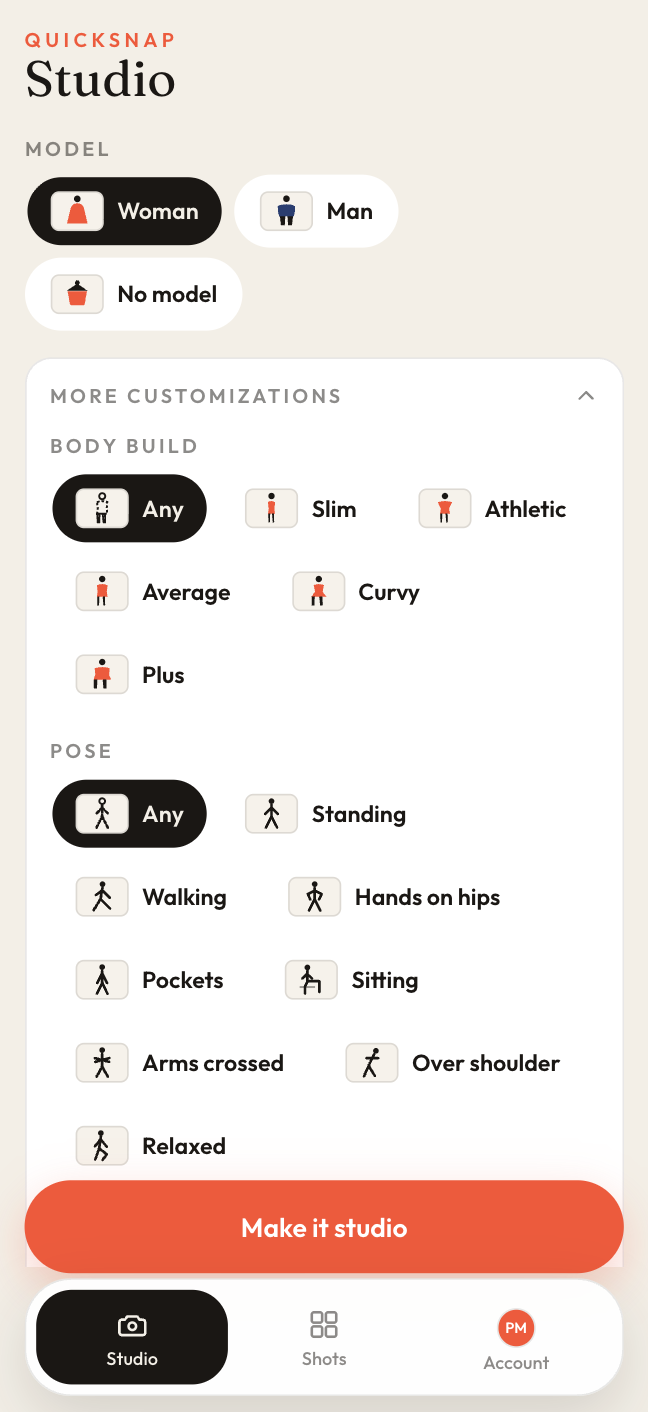
When the dress is on the table later, start a new shot. Choose Clothes, then Woman or Man, and set the model only as far as the listing needs. No model and Flat lay if the dress should be folded rather than worn. The background can match the lamp, White or Soft shadow, so the shop still looks like one seller. Or the dress can have one Story frame for a status. Look at the category again. That choice is what keeps a person out of the lamp photo.
Two catalogs, one workspace
Shots can be filtered to Clothes or Products. The card on each shot says which it is. Open the lamp, save it, then open the dress, without hunting the morning’s camera roll. Each of those is a studio shot and counts toward the allowance. Deleting one does not return it.
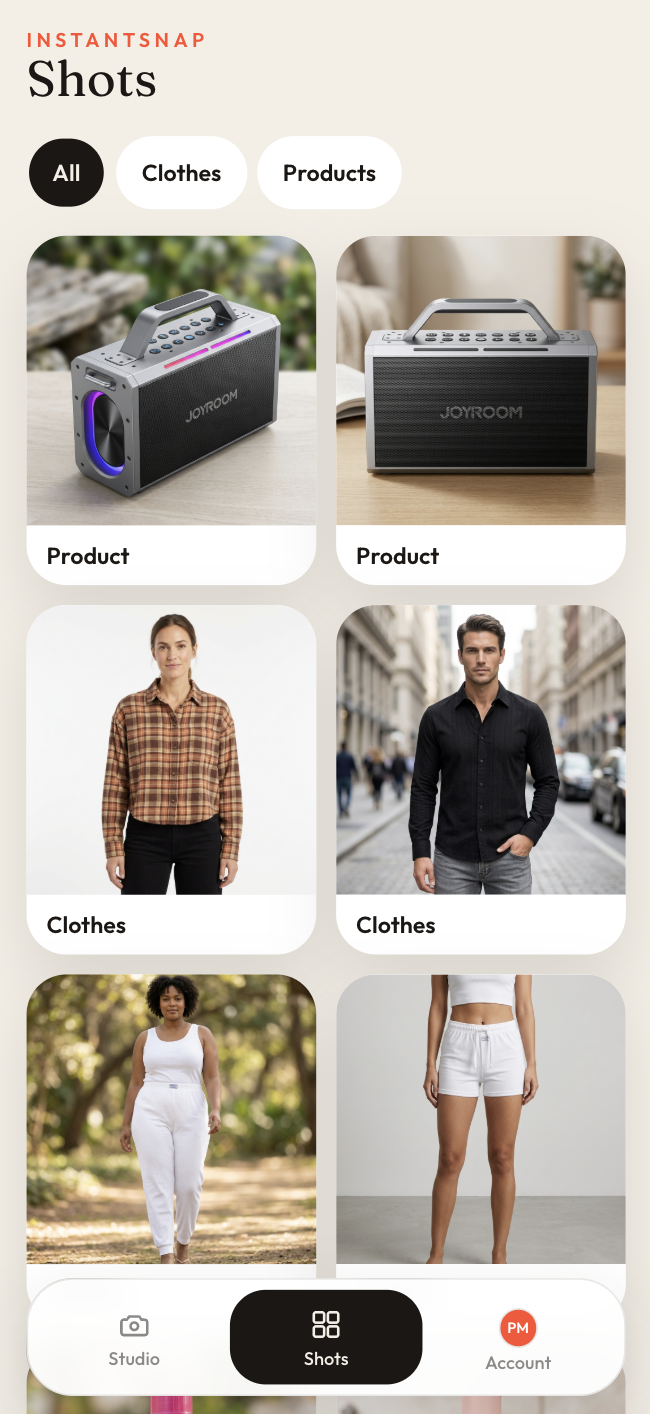
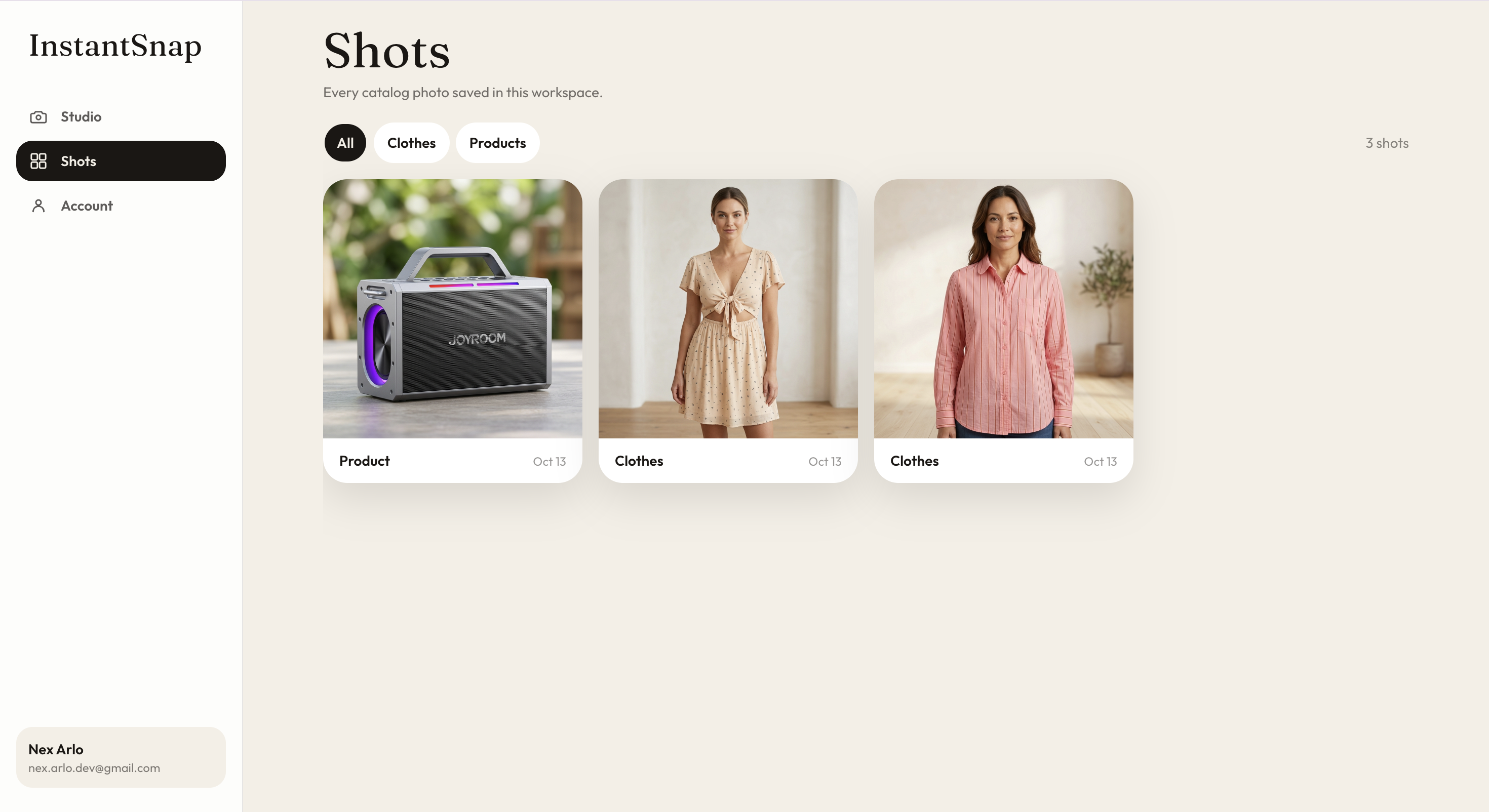
The habit is the category, chosen again for every parcel. The lamp stays an object. The dress can be worn. The shop looks like one catalog because the backgrounds agree, not because both products were forced into the same kind of photo.